|
|
|||||
| The original UK Club dedicated exclusively to the Ocicat and Aztec | |||||
| Header photographs © Robert Fox | |||||
WELFARE If you know of an Ocicat welfare issue, or an adult Ocicat needing a new home...
|
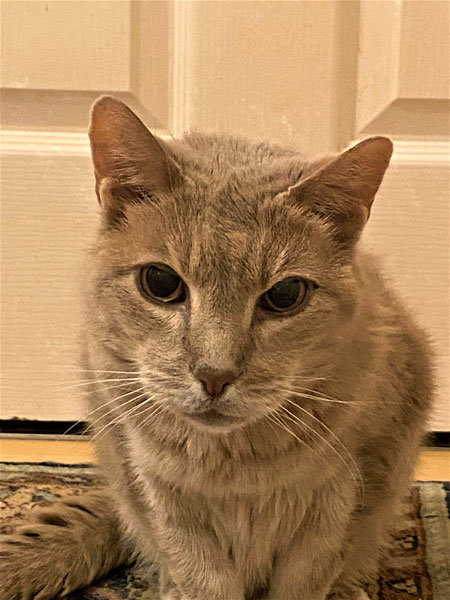
Ocicat Welfare URGENT HOME NEEDED for YumYums, a lilac ocicat, who was born in 2005. Sadly, Veronica, her owner, one of the early Ocicat breeders, will shortly be moving into a nursing home and won't be able to take her beloved cat with her. Yum Yums is a bit timid and needs a home where she can live indoors with someone who can give her the best care in her twilight years. Yum Yums has been Veronica’s pride and joy for the last 18 years and her welfare is of utmost concern. Understandably the future costs involved in homing an elderly cat can be of concern but the Club is here to help in that respect if needed. Veronica lives in Saltford (between Bath and Bristol). If anyone can help, or knows of someone who can, please contact Manuela at manuelacroft@gmail.com or on 07870 747639
If you have a welfare concern please contact the Ocicat Club Welfare Officer, Mrs Manuela Croft in the first instance Tel: 07870 747639 or Email In the past The Club had some concerns that should an Ocicat need to be found a new home (for whatever reason), there seemed to be no definite place that a cat could be taken to in the short term until a new home was found. The Club has an ongoing interest in hearing from any members who feel they may be able to help with any welfare issues. If it is not possible to offer a foster home, if members could please consider whether they might be able to act as “taxi-driver”, to take an Ocicat in need to a foster home in your general area? In April 2010 an Ocicat owner reported seeing a lady intently watching his beloved pet cat as it sunbathed in his front garden. Later in the week he was fortunate enough to witness the same lady, this time accompanied by a man, park their car nearby and walk towards his cat with an empty cat box. The owner made his presence known and the two people hurried away. This took place in Dulwich London, and the owner was very concerned that this couple had intended to steal his cat. He has notified the police and asked that other pet owners be warned. PIPE CLEANER TOYS - WARNING! WARNING ! Get Rid of Toys made from Pipe Cleaners!!! I just want to warn everyone of a danger that never occurred to me until this weekend. At various shows, I have received little cat toys made from pipe cleaners often twisted to look like a bug or caterpillar, and I have just tossed them into the show bag for future use. I thought this was a nice little bonus from the clubs who did this and have never had a second thought about giving them to my cats. This weekend, I tossed one into my cat's cage on Saturday afternoon and watched while he tossed it and chased it and generally had fun with it. Later when I returned to my cage I found the toy MINUS one of its antennae! I looked everywhere in the area (even sifted the litter) but could not find the missing portion of the pipe cleaner. I watched the cat closely for the rest of the weekend; he seemed OK until Monday morning as we were standing in the security line at the airport when he started to vomit. He vomited several times on the way home so the moment we got home, I headed for the vet. Sure enough, the x-ray showed the pipe cleaner segment lodged in the stomach with a very sharp point visible and in a position that the vet did not think it would pass on its own. Therefore, we had to have emergency surgery to remove the pipe cleaner segment; it all came out in one piece and the cat should be OK but this was a very scary situation. I have now disposed of all the pipe cleaner toys that I had and will never risk giving one to a cat again. I would recommend that anyone reading this do the same. Jean-Marc Lagarde (TICA Judge) GARDEN MULCH and CHOCOLATE - WARNING!
Thebromine poisoning does not begin and end with cocoa mulch, chocolate in any form can pose a substantial risk to dogs and cats. Chocolate contains both Theobromine and Caffeine Theobromine can affect the heart, central nervous system and kidneys causing nausea and vomiting. Cardiac arrythmia and seizures are symptoms of more advanced poisining. This is a general heed to pet owners of the potential impact that everyday products can have on the health of our pets. Theobromine poisoning is usually treatable if caught early on. URBAN FOXES - BEWARE! The Club Comments: A devastated pet owner supplied the above tale, and although they found information that advised that a fox attack on a cat was extremely rare, information on the Internet shows an increasing trend. The foxes had adapted well to city life, and were kept well fed from our scraps. In recent years, with the introduction of wheelie bins we have altered the ease of access to our food scraps, resulting in many foxes living on the brink of starvation. The following link gives details of an attack on a cat by foxes with an explanation to the likely reasons, it is very graphic in it's description and therefore very upsetting, but does explain the worrying risks for our urban pets Click Here
|
||||
|
|
|||||
|
Home | The Ocicat | The Aztec | Show Results | Hall of Fame | Breeders | Ocicat Show |
|||||
|
All content copyright The Ocicat Club UK © 2002-2017 All rights reserved |
|||||
 Cocoa mulch is favoured by gardeners for its fine texture and the sweet smell of chocolate it gives off. However many varieties of Cocoa garden mulch contain Theobromine, this can sicken and even cause death in dogs and cats if consumed in sufficient quantities.